
Ceramic vs Titanium Hair Straightener: Which Plate Material Is Right for You?
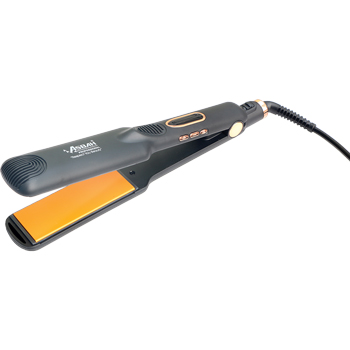
The plate material in a hair straightener is not a marketing detail — it determines how heat reaches the hair, how evenly it distributes and how the hair responds to each pass. Ceramic plates heat evenly and emit far infrared heat that gently penetrates the hair shaft, making them gentler on fine and colour-treated hair. Titanium plates heat faster, reach higher temperatures and are more durable, making them better for thick, coarse hair and high-volume salon work. Asbah Beauty — a Mumbai-based professional salon equipment manufacturer trusted since 1962 — makes both: the D'zara Pro Hair Straightener with diamond brim ceramic plates at ₹7,970 and the Titanium Hair Straightener with nano titanium plates at ₹5,310. Both run at 50 watts, feature 3D floating plates and variable temperature control. Both are built for daily salon-grade use, backed by a 1-year warranty and lifetime repairs & services.
Choosing between ceramic and titanium is not about which is "better" — it is about which matches the hair type you work with most often. A salon that primarily serves clients with fine, colour-treated hair will get better results with ceramic. A salon that handles thick, coarse hair daily will benefit from titanium's faster heat-up and higher temperature ceiling. Many salons stock both to cover every client. This guide breaks down exactly how ceramic and titanium differ, what each one does to the hair and how to pick the right plate material for your needs.
How Ceramic Plates Work
Ceramic plates are made from a ceramic coating applied over a metal base (usually aluminium). The ceramic layer heats evenly across the entire plate surface, eliminating the hot spots that can damage hair. When heated, ceramic emits far infrared heat — a type of heat that penetrates the hair shaft from the inside out rather than just heating the surface. This produces smoother results with less damage because the hair is heated more gently and more uniformly.
Ceramic plates also emit negative ions during heating, which break down water molecules on the hair surface. This reduces frizz, seals the cuticle and adds shine. The combination of even heat, infrared technology and negative ion output makes ceramic the preferred choice for fine, thin or colour-treated hair that needs gentle, consistent heat without hot spots.
How Titanium Plates Work
Titanium plates are made from titanium metal, which is lighter than steel but significantly stronger. Titanium heats up faster than ceramic and reaches higher maximum temperatures — the Asbah Titanium Straightener hits 230°C in just 27 seconds, while the D'zara Pro ceramic reaches 240°C in 37 seconds. Titanium also retains heat more consistently, meaning the temperature does not drop as much when it contacts the hair.
This combination of fast heat-up, high temperature and consistent heat retention makes titanium ideal for thick, coarse or curly hair that needs more heat to straighten effectively. A single pass with a titanium straightener can achieve results that might take two or three passes with ceramic — which actually reduces total heat exposure despite the higher temperature. Titanium plates are also more scratch-resistant, which means they maintain their smooth surface longer under heavy salon use.
Ceramic vs Titanium: Side by Side
Both materials are professional-grade, but they behave differently. Here is a direct comparison of the key factors.
Gentler, more even heat. Far infrared technology heats from inside the hair shaft. Best for fine, thin, damaged or colour-treated hair. Slower heat-up but more consistent distribution. May develop micro-scratches over years of heavy use.
Faster, more powerful heat. Reaches higher temperatures in less time. Best for thick, coarse or curly hair. More scratch-resistant and durable. A single pass can achieve what ceramic needs two passes for.
Professional-grade performance. Both feature 3D floating plates, 360° swivel cords, variable temperature control and negative ion technology. Both are backed by a 1-year warranty and lifetime repairs & services.
- Heat distribution — ceramic distributes heat more evenly across the plate surface. Titanium concentrates heat more intensely but still distributes it consistently.
- Heat-up speed — titanium heats faster. The Asbah Titanium reaches 230°C in 27 seconds; the D'zara Pro ceramic reaches 240°C in 37 seconds.
- Maximum temperature — both reach high temperatures, but the D'zara Pro ceramic goes slightly higher (240°C vs 230°C) because of its heat expansion technology.
- Durability — titanium is more scratch-resistant and maintains its smooth surface longer. High-quality ceramic like the D'zara series is also built for durability but may show wear sooner under heavy daily use.
- Hair type suitability — ceramic for fine, thin, damaged or colour-treated hair. Titanium for thick, coarse or curly hair. Both work on normal hair.
- Price — the Asbah D'zara Pro ceramic is ₹7,970; the Titanium is ₹5,310. The ceramic commands a premium because of its advanced plate technology and keratin treatment compatibility.
Which Plate Material Suits Your Hair Type
The right choice depends on the hair you work with most often — either your own hair at home or your clients' hair in a salon.
- Fine or thin hair — choose ceramic. The even heat distribution and infrared technology prevent hot spots that can damage fragile strands. Use lower temperatures (150°C–180°C).
- Normal hair — either material works. Ceramic gives a gentler experience; titanium gives faster results. Choose based on your preference and styling speed needs.
- Thick or coarse hair — choose titanium. The faster heat-up and higher temperature output cut through thick hair more efficiently. Fewer passes mean less total heat exposure.
- Curly or wavy hair — choose titanium for straightening. The consistent high heat relaxes curl patterns more effectively in a single pass.
- Colour-treated hair — choose ceramic. The gentler, more even heat reduces the risk of colour fading and heat damage to chemically treated strands.
- Keratin treatments — choose the D'zara Pro ceramic. It is specifically designed for keratin treatment work, reaching 240°C with non-reactive heating plates that do not interfere with the treatment chemicals.
The Asbah D'zara Pro: Ceramic at Its Best
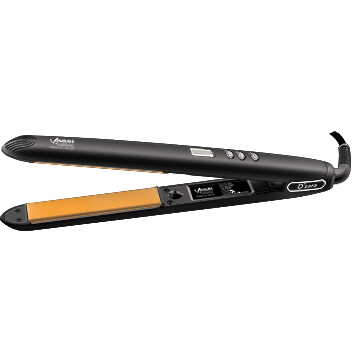
The D'zara Pro is Asbah's premium ceramic straightener, built for salons that need the highest level of plate technology. It features diamond brim ceramic plates with negative ion technology, far infrared technology and heat expansion technology. The plates are non-reactive, which means they do not interact with keratin treatment chemicals — a critical feature for salons that offer keratin services.
- ₹7,970 (MRP ₹10,620) — premium ceramic with advanced plate technology
- 240°C variable temperature control — the highest in the Asbah range, ideal for keratin treatments
- Rapid heat technology — reaches 240°C in 37 seconds
- Diamond brim technology — ultra-smooth plate surface for effortless gliding through hair
- Negative ion technology — reduces frizz, seals cuticle, adds shine
- Far infrared technology — heats hair from the inside out for gentler, more even results
- 3D floating plates — adjust to hair thickness for even pressure and consistent heat
- 360° swivel cord — prevents tangling during styling
The Asbah Titanium Straightener: Power and Speed
The Titanium Straightener is Asbah's professional workhorse, built for salons that need speed and power. Its nano titanium plates heat fast and maintain temperature through thick sections of hair, making it the more efficient choice for high-volume straightening work.
- ₹5,310 (MRP ₹7,080) — professional titanium at an accessible price
- 230°C variable temperature control — handles all hair types from fine to thick
- Rapid heat technology — reaches 230°C in just 27 seconds, the fastest in the range
- Nano titanium technology — ultra-smooth, scratch-resistant plate surface
- 3D floating plates — adjust to hair thickness for even pressure
- 360° swivel cord — prevents tangling during styling
How to Get the Best Results from Either Plate
- Start with clean, dry hair — always straighten hair that is completely dry. Wet or damp hair can steam and burn under the heat.
- Apply a heat protectant — this creates a barrier between the hair and the plates, reducing damage regardless of plate material.
- Section the hair — divide into thin, even sections. Thinner sections straighten more efficiently and require fewer passes.
- Choose the right temperature — fine hair: 150°C–180°C. Normal hair: 180°C–210°C. Thick or coarse hair: 210°C–240°C.
- Glide slowly and steadily — do not rush. A slow, steady pass delivers better results than multiple fast passes.
- Do not clamp too tightly — let the 3D floating plates do the work. Pressing too hard causes creases and uneven results.
Common Mistakes to Avoid
- Using titanium on fine hair at high heat — titanium's fast, intense heat can damage fine strands. Use ceramic or lower temperature settings.
- Skipping heat protectant — regardless of plate material, unprotected hair suffers more damage from repeated heat exposure.
- Taking sections that are too thick — thick sections require multiple passes, which increases total heat exposure and damage risk.
- Using the wrong temperature — too low and the hair will not straighten; too high and it will burn. Match the temperature to the hair type.
- Cleaning plates with abrasive materials — this scratches the surface and reduces performance. Wipe with a damp cloth after the plates cool.
- Storing with the cord wrapped tightly — this damages the internal wiring. Loop the cord loosely for storage.
Explore the Asbah Straightener Range
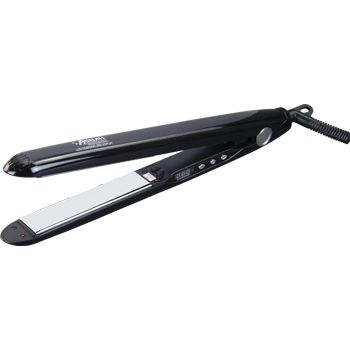
Ceramic or titanium — choose the plate material that matches your hair type. Made in India.
Frequently Asked Questions
What is the difference between ceramic and titanium plates?
Ceramic plates heat evenly and emit infrared heat that gently penetrates the hair shaft, making them gentler on fine and damaged hair. Titanium plates heat faster, reach higher temperatures and are more durable, making them better for thick, coarse hair and high-volume salon work.
Which is better for fine or damaged hair — ceramic or titanium?
Ceramic is better for fine or damaged hair. Ceramic plates distribute heat more evenly and emit far infrared heat, which is gentler on the hair cuticle. This reduces the risk of hot spots and heat damage. Titanium's higher heat output can be too aggressive for fragile hair.
Which is better for thick or coarse hair — ceramic or titanium?
Titanium is better for thick or coarse hair. It heats faster, reaches higher temperatures and maintains heat more consistently through thick sections of hair. This means fewer passes over the same section, which reduces overall heat exposure and speeds up the styling process.
What temperature should I use for keratin treatments?
Keratin treatments typically require temperatures between 220°C and 240°C. The Asbah D'zara Pro reaches 240°C and is specifically designed for keratin treatment work. Always follow the keratin product manufacturer's recommended temperature settings.
How long does a titanium straightener last compared to ceramic?
Both ceramic and titanium straighteners last for years with proper care. Titanium plates are more scratch-resistant and maintain their smooth surface longer than ceramic. Ceramic plates may develop micro-scratches over time with heavy salon use, but high-quality ceramic like the D'zara series is built for durability.
Can I use a titanium straightener on color-treated hair?
Yes, but with caution. Color-treated hair is more vulnerable to heat damage. Use lower temperature settings (150°C–180°C) and always apply a heat protectant. Ceramic plates are generally gentler on color-treated hair because of their even heat distribution and infrared technology.
What is negative ion technology in a hair straightener?
Negative ion technology releases negative ions during heating that break down water molecules on the hair surface. This reduces frizz, seals the hair cuticle and adds shine. Both ceramic and titanium straighteners can include this technology — the Asbah D'zara series features negative ion technology across all models.
What is the warranty on Asbah hair straighteners?
All Asbah Beauty hair straighteners come with a 1-year warranty and lifetime repairs and services. This covers manufacturing defects and ensures your straightener stays in working condition for years of daily salon use.
View the D'zara Pro Hair Straightener
Check availability, full specifications and pricing on the product page.